Maritime Checkpoints
Maritime borders represent unique jurisdictional complexity. A vessel passing from international high seas into a coastal state's Exclusive Economic Zone (EEZ), Contiguous Zone, and Territorial Waters navigates three distinct legal frameworks before a single line is thrown to a dock.
UNCLOS Territorial Waters & Innocent Passage
Under the United Nations Convention on the Law of the Sea (UNCLOS, 1982), coastal states exercise sovereign authority over their 12-nautical-mile territorial sea. However, Article 17 guarantees the right of "innocent passage" to foreign-flagged vessels. Passage is legally deemed innocent so long as it is continuous, expeditious, and not prejudicial to the peace, good order, or security of the coastal state.
The instant a vessel drops anchor, hoists a tender, launches airborne drones, or approaches a designated harbor without pre-clearance, innocent passage ceases and full coastal customs jurisdiction takes effect.
The Q-Flag and Pre-Arrival Notification
Private and commercial vessels entering territorial waters must hoist the yellow "Q" (Quebec) international maritime signal flag, declaring that the vessel requires customs and health quarantine clearance.
Masters must transmit an IMO FAL Form declaration—encompassing crew manifests, passenger rosters, ship stores, and dangerous cargo lists—through the national Maritime Single Window at least 24 hours prior to reaching the pilot station.
Ferry Passenger Processing
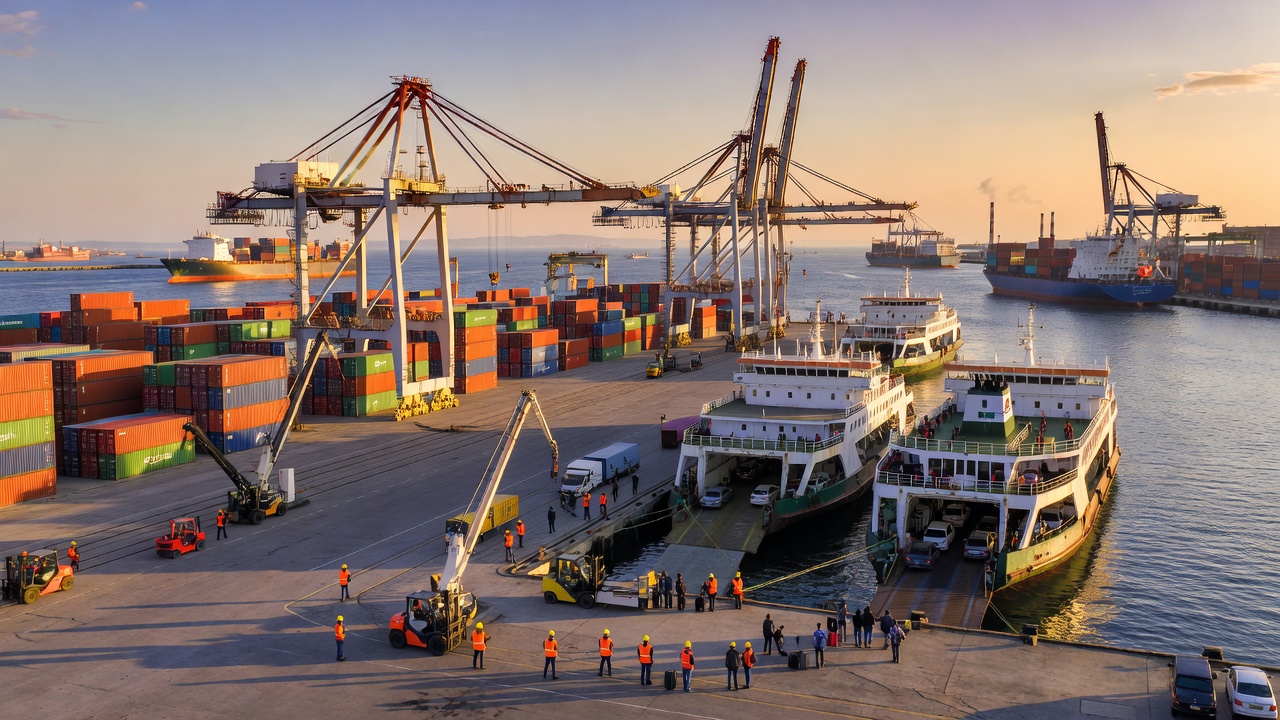
International passenger ro-pax ferries operate with automated electronic manifests. Vehicles and passengers face simultaneous customs declaration and biometric e-Gate checks upon debarking at dedicated Ro-Ro border quays.
Cruise Ship Transit Protocols
Cruise passengers calling at foreign ports for short day-excursions commonly benefit from simplified crew-list transit privileges (Blanket Clearance), eliminating individualized immigration stamps unless shore excursions exceed 24 hours.
Contiguous Zone Interceptions
Between 12 and 24 nautical miles from coastal baselines lies the Contiguous Zone. Here, coast guards and national border enforcement retain legal powers to prevent and punish infringements of customs, fiscal, immigration, or sanitary laws committed within their territory or territorial sea.